

[Responding to a Misleading 486 Weekly Article | The Truth About Gas Dryers vs. Heat Pump Dryers]
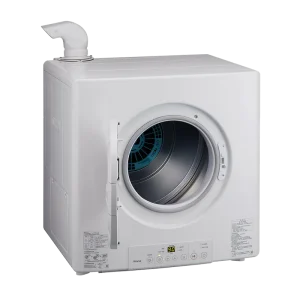
Recently, quite a few customers have again brought up an article written by “486 Da Zhangfu Weekly” titled “Exposing the Untold Secrets of the Washer and Dryer Installation Industry”. The article strongly promotes heat pump dryers and uses vague or even incorrect information to imply that gas dryers are dangerous. As a professional gas dryer installation team, we have a responsibility to speak up for the truth.
The purpose of the article is obvious: to steer consumers toward “heat pump dryers”, because 486 itself does not sell gas dryers.
We have commented several times to clarify the facts, but our comments were deleted outright, so we have chosen to publish a full explanation on our fan page so that consumers can make an informed judgment.
Here is why the article lacks credibility:
It does not name a single fire-causing model or case, and there are no news reports to back it up. If household gas dryers had really caused fires, there would be traces online by now, yet there is no evidence whatsoever.
It misdescribes the structure of gas dryers: the “copper tubing” mentioned in the article is actually a component found only in heat pump dryers. Gas dryers have no such design, so the description clearly does not match their actual construction.
Misleading claims about extension cords causing fires: gas dryers consume very little electricity, even less than a typical washing machine. The appliance that is actually prone to problems from electrical overload is the power-hungry heat pump dryer, which uses more than 3.3 times as much power as a Rinnai gas dryer — you read that right, more than 3.3 times.
Exaggerated carbon monoxide poisoning risk: according to tests by the Bureau of Standards, Metrology and Inspection, Ministry of Economic Affairs, a Rinnai gas dryer consumes only about 1/5~1/7 as much gas as a water heater and 1/2 as much as a gas stove, so its gas usage is very economical. In news reports, carbon monoxide poisoning cases always involve water heaters; you've probably never heard of carbon monoxide poisoning from a gas stove. A Rinnai gas dryer uses only half the gas of a gas stove, so where does this exaggerated carbon monoxide risk come from? As long as the piping is done correctly by a qualified technician, it is perfectly safe to use.
Why do we still recommend gas dryers?
Compact and space-saving: it can be mounted above the washing machine without taking up floor space — a lifesaver for space efficiency in an era of high property prices.
Efficient drying, time-saving: a typical load is done in 30~45 minutes, while a heat pump takes 1.5~2 times longer or more.
Low electricity bills, quiet operation: the main energy source is gas, so your electricity bill won't rise significantly.
Simple structure, easy maintenance: no compressor or complex circuit boards, so repairs and maintenance are easier.
Hygienic and safe: high-temperature drying comparable to sun-drying sterilizes clothes and genuinely protects the skin — recommended by dermatologists.
Heat pump dryers, on the other hand, have the following drawbacks that cannot be ignored:
High purchase cost — they are not cheaper
Large and heavy, cannot be wall-mounted
Long drying times, high power consumption
Complex structure, difficult to repair and maintain
Take up a lot of floor space, disrupting movement around the home
Used indoors, they release carcinogenic gases, because laundry detergents contain cleaning agents, optical brighteners, fragrance fixatives and other chemicals — more deadly than secondhand smoke
Our position is simple:
Consumers have the right to know, and manufacturers should honestly disclose the pros and cons of their products, rather than mislead the public with out-of-context claims or “evidence-free fear marketing”.
Anyone with questions is welcome to leave a comment and discuss so the truth can come to light. Do some research online and you'll see the appeal of Rinnai gas dryers.
Whether you choose a heat pump or a gas dryer, let facts and data decide — don't be led by unsubstantiated online articles from 486.
No account yet?
Create an Account